
Daily Drop (1243)
02-09-26

Monday, Feb 09, 2025 // (IG): BB // GITHUB // SN R&D
TOOL:
Weibo Signal Tracker
Narrative signal monitoring system that tracks Weibo trending search data with velocity analysis and lifecycle detection.

NEWS:
Why the attempt on a GRU leader is a strategic message, not a random crime
Bottom Line Up Front (BLUF): The attempted assassination of Lt. Gen. Vladimir Alekseyev, deputy head of Russia’s GRU, inside a Moscow residential building is a direct strike at the core of Russia’s military-intelligence elite, not a one-off crime. Coming after a string of killings of senior generals and shortly after trilateral Russia–Ukraine–US talks in Abu Dhabi, it reinforces the picture of an ongoing covert campaign targeting key figures in Russia’s war machine and exposing serious security and counterintelligence gaps in Moscow itself.
Analyst Comments: News.az, citing BBC, reports that Vladimir Alekseyev—lieutenant general and deputy head of the GRU—was the target of a shooting attack in a residential building in northwestern Moscow on the morning of 6 February. The attacker allegedly waited on a stairwell one floor above Alekseyev’s apartment, opened fire, and fled the scene. Neighbors called emergency services after hearing gunshots and finding him wounded; he was taken to intensive care and is reportedly in serious condition. Russian authorities have not publicly identified the suspect.
READ THE STORY: News.az
Ukraine Expands Sanctions on Russia’s Financial and Defense Sectors
Bottom Line Up Front (BLUF): Ukraine has approved a new sanctions package targeting Russia’s financial infrastructure and defense-industrial base, expanding restrictions on banks, defense manufacturers, and affiliated individuals supporting Moscow’s war effort. For compliance and risk teams, the impact is growing sanctions fragmentation: organizations now need to track not only US/EU/UK lists but also Ukrainian measures that can affect transactions, transit, and asset exposure involving Ukraine-linked corridors and counterparties.
Analyst Comments: Each new Ukrainian list adds entities and individuals that Western and regional banks will quietly risk-score as toxic, even if they’re not yet on US/EU lists. That raises three main operational issues: (1) higher compliance overhead for banks and fintechs with exposure to Eastern Europe and CIS-adjacent trade, (2) more de-risking of gray intermediaries in Turkey, the Caucasus, Central Asia, and the Middle East that facilitate Russian trade and payments, and (3) increased scrutiny on any vendor even loosely tied to Russian aerospace, precision manufacturing, or dual-use goods. This won’t crater Russia’s macroeconomy, but it adds friction, increases due diligence costs, and expands the universe of “too messy to touch” counterparties.
READ THE STORY: AA
Russia’s Hackers ‘Have the UK in Their Sights’
Bottom Line Up Front (BLUF): UK officials and security experts are warning that Russia-linked hackers are increasingly targeting British government, critical national infrastructure, media, and political institutions. The activity spans espionage, disruptive cyber operations, and influence efforts, reinforcing that Russian operators see the UK as a priority adversary in both intelligence collection and information operations.
Analyst Comments: Moscow’s services and aligned groups are running overlapping campaigns: long-term espionage against government, defense, think tanks, and contractors; option-building against energy, healthcare, local authorities, and other critical services; and hack-and-leak plus disinformation to erode trust in institutions, especially around elections and support to Ukraine. If you touch policy, critical services, or public opinion—even indirectly via law, media, academia, MSP, or consultancy—assume you’re in scope. Expect multi-vector tradecraft (phishing, credential stuffing, supply-chain abuse, social engineering) in support of the same strategic objectives. Public attributions by the UK should be read as mid-campaign pressure, not the end of operations.
READ THE STORY: LBC
How Israel Uses Cyber Warfare to Undermine Iran’s Military Power
Bottom Line Up Front (BLUF): Open-source reporting describes a sustained Israeli cyber campaign aimed at disrupting Iran’s nuclear and military programs, degrading IRGC and proxy capabilities, and imposing economic and psychological costs without triggering open war. The operations blend OT/ICS disruption, data-focused intrusions, and information effects, illustrating how states now use cyber as a core tool in long-term gray-zone conflict.
Analyst Comments: Israel–Iran is the textbook case of slow-burn cyber conflict: persistent, deniable, and tightly integrated with kinetic and intelligence activity. The goal isn’t a single decisive hit but constant delay and friction across Iran’s nuclear work, missile programs, logistics networks, and critical infrastructure. Publicly visible disruptions—fuel stations, ports, transport—serve both operational and signaling purposes, reminding Tehran and the region of Israeli reach while staying just under the threshold that would demand overt retaliation.
READ THE STORY: JNS
Iran Says It’s Ready for Nuclear-Focused Talks, Rejects US Military Buildup
Bottom Line Up Front (BLUF): Iranian officials say Tehran is prepared to resume talks limited to its nuclear program, while sharply rejecting what it calls a US military buildup in the region. That signals a narrow diplomatic opening on the nuclear file but no softening on Iran’s ballistic, regional, or proxy posture—leaving the underlying escalation risk in the Gulf and Levant largely intact.
Analyst Comments: Al Jazeera reports that Iran has publicly stated it is ready to engage in talks focused on its nuclear program, signaling willingness to return to negotiations provided the agenda is tightly scoped. Iranian officials reiterate that the country’s nuclear activities are for peaceful purposes, while condemning what they describe as a US military buildup in the region—including additional forces and assets deployed under the banner of deterrence.
READ THE STORY: Aljazeera
Beijing Exports Digital Repression Model to Iran, Deepening Surveillance and Control
Bottom Line Up Front (BLUF): China is actively enabling Iran’s digital repression apparatus by exporting surveillance technologies, governance models, and technical expertise. According to ARTICLE 19, this cooperation is tightening Iran’s control over information space, strengthening censorship, monitoring, and population-level repression while insulating the regime from internal dissent.
Analyst Comments: The strategic concern goes beyond Iran. What’s being refined here is a scalable repression stack—one that combines infrastructure, policy, and technical enforcement into a coherent system. As Western technology decouples from sanctioned states, China increasingly becomes the provider of last resort, shaping how control is implemented. The long-term risk is normalization: repression by design, backed by mature, exportable technology.
READ THE STORY: Article 19
China’s Caribbean Play: America’s New Front
Bottom Line Up Front (BLUF): Beijing is steadily deepening its economic and strategic footprint in the Caribbean through infrastructure projects, loans, and diplomatic outreach—creating a quiet but real pressure point on the United States’ traditional sphere of influence. While framed as development and investment, the long-term effect is greater Chinese leverage over ports, telecoms, and votes in international forums within Washington’s geographic backyard.
Analyst Comments: This isn’t about PLA bases popping up tomorrow—it’s about shaping the environment over a decade. Beijing is trading concrete and credit for access, influence, and optionality: port calls for PLAN vessels, strategic leverage in crises, and reliable votes in multilateral bodies when issues like Taiwan, Xinjiang, or sanctions come up. For the US, the risk isn’t that it’s “losing” the Caribbean overnight, but that it’s treating the region as an afterthought while China shows up with money, speed, and fewer governance strings.
READ THE STORY: Times of Israel
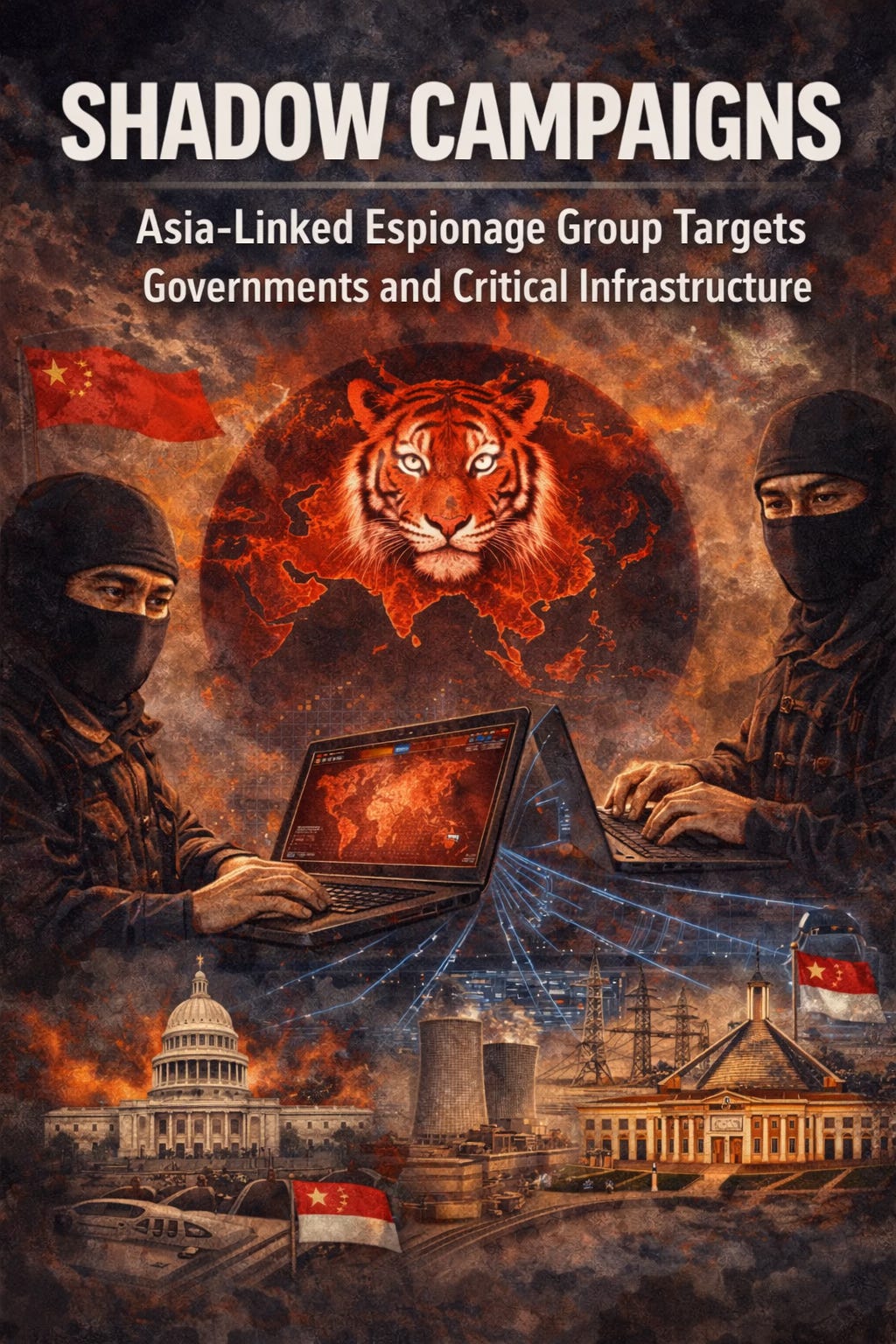
“Shadow Campaigns” Asia-Linked Espionage Group Targets Governments and Critical Infrastructure
Bottom Line Up Front (BLUF): An Asia-linked cyber-espionage group is conducting long-running “shadow campaigns” against government agencies and critical infrastructure operators worldwide. The activity emphasizes stealth, persistence, and intelligence collection, with compromises designed to remain undetected for extended periods rather than deliver immediate disruptive effects.
Analyst Comments: Targeting critical infrastructure alongside government networks is especially telling. Even if no immediate disruption occurs, access itself is leverage. It provides contingency options—insight during negotiations, early warning in crises, or coercive potential if tensions escalate. For defenders, these campaigns are hard to counter because they deliberately avoid noisy malware, rely on trusted credentials, and blend into normal administrative behavior.
READ THE STORY: ITSECNEWS
China-Linked UNC3886 Targets Singapore Telcos, No Service Disruption Reported
Bottom Line Up Front (BLUF): Singapore’s cybersecurity agency has confirmed that China-linked threat actor UNC3886 targeted local telecommunications providers. Authorities report no service disruption or data breach, but the activity highlights continued strategic interest in telecom infrastructure despite strong defensive outcomes.
Analyst Comments: Telecommunications networks are intelligence goldmines. Even when attacks fail or are contained early, the targeting itself matters. Groups like UNC3886 don’t probe telcos at random—they’re testing access paths, security posture, and response times. The lack of disruption is a win for defenders, but it shouldn’t breed complacency. Advanced actors often conduct multiple waves of low-visibility reconnaissance before committing to deeper intrusion attempts. Singapore’s transparency also sets a useful precedent: acknowledging targeting without overstating impact helps maintain trust while signaling deterrence.
READ THE STORY: Malay Mail
Salt Typhoon Fallout Raises Congressional Pressure as Telcos Withhold Defense Details
Bottom Line Up Front (BLUF): U.S. telecommunications providers remain unwilling to disclose how they mitigated the China-linked Salt Typhoon intrusions, prompting renewed congressional scrutiny. At the same time, the week’s infosec developments reinforce broader trends: rapid weaponization of new vulnerabilities by Chinese APTs, continued fragility in enterprise software security, and the growing overlap between cybercrime and physical-world violence.
Analyst Comments: When major telcos refuse to share post-incident security assessments, even with lawmakers, it raises doubts about whether meaningful remediation actually occurred. Senator Cantwell’s pressure campaign suggests concern that cost, not capability, is dictating defensive posture. For a sector designated as critical infrastructure, opacity is becoming a strategic liability. Elsewhere in the brief, the signal is consistency. Chinese-linked actors continue to exploit fresh vulnerabilities at speed, reinforcing their reputation for operational agility. Defensive tooling like OpenClaw is trying to bolt on safeguards after the fact, while enterprise software vendors like SmarterMail keep surfacing in CISA’s KEV catalog. Meanwhile, crypto-driven crime continues to spill offline, reminding defenders that cyber risk increasingly carries physical consequences.
READ THE STORY: The Register
Items of interest
Unplugging Beijing: Strategic Push to Reduce Dependence on Chinese Technology and Infrastructure
Bottom Line Up Front (BLUF): Democracies are moving—slowly but decisively—to reduce their exposure to Chinese technology in critical infrastructure, telecom, cloud, and hardware supply chains. “Unplugging Beijing” in practice means diversifying vendors, restricting PRC-linked tech from sensitive networks, and tightening export controls on advanced chips and manufacturing equipment. The transition will be messy and expensive, but the alternative is long-term strategic dependence on an authoritarian rival with a track record of cyber espionage, IP theft, and coercive economic behavior.
Analyst Comments: PRC-linked vendors in 5G, cloud, and backbone equipment can be leveraged for intelligence collection, disruption, or pressure in a crisis. “Unplugging” doesn’t mean instant decoupling; it’s more like a phased emergency migration off a vendor you no longer trust. Expect more supply-chain screening, more bans on specific products (especially in government and critical infrastructure), and quieter but aggressive moves to replace Chinese equipment in telecom cores, data centers, and industrial control environments. Organizations that wait for formal mandates will be doing rushed, expensive rip-and-replace later under worse conditions.
READ THE STORY: FDD
A Full US-China Decoupling Devastate China’s Economy, Weak Domestic Demand Leaves Businesses Bleak (Video)
FROM THE MEDIA: Due to the ongoing economic downturn, major e-commerce platforms are now offering significant subsidies as sellers lower prices in a hurry.
How Export Controls Are Reshaping the Global Chip Industry: US-China Semiconductor Policies (Video)
FROM THE MEDIA: U.S.-led export controls are transforming the global semiconductor landscape — and what it means for chipmakers, investors, and the tech economy. Building on our previous videos “The Great Silicon Divide” and “Rare Earths: China’s Hidden Leverage,” this episode focuses on the latest policy shocks and the growing divide between U.S.-aligned and China-aligned tech ecosystems.
The selected stories cover a broad range of cyber threats and are intended to help readers frame key publicly discussed threats and improve overall situational awareness. InfoDom Securities does not endorse any third-party claims made in its original material or related links on its sites; the opinions expressed by third parties are theirs alone. For further questions, don't hesitate to get in touch with InfoDom Securities at dominanceinformation@gmail.com.